

The Jewel of Morocco Past and Present – 9 Days
This 9-day Morocco private tour from Tangier to Marrakech begins where Africa almost touches Europe. You land at Tangier’s airport or step off the ferry at its port, and from there a private driver and licensed local guides, speaking English or any language you choose, take you south through the country’s four imperial cities: Rabat, Meknes, Fes and Marrakech. Along the way you stop in Casablanca for the Hassan II Mosque, walk the Roman streets of Volubilis and cross the cedar-covered Middle Atlas before three nights in Marrakech.
The route is built for travellers who want Morocco’s history, architecture and medinas without the long drives of a Sahara circuit. Each day has a guided programme, entrance fees and tickets for gardens, museums and galleries are covered, and there is still free time in the evenings to explore on your own. As with all Morocco Private Trip itineraries, the trip is yours alone, so pace, hotels and stops can be adjusted to suit you.
Day 1: Arrive in Tangier – Medina, Cape Spartel & the Caves of Hercules

Your driver meets you at Tangier International Airport or at the port and takes you to your hotel. Depending on when you arrive, your guide can lead a first walk through the medina’s lanes and souks: the Grand Socco, the Mendoubia Gardens and their centuries-old trees, the Kasbah square and the old Méchouar where pashas once held audience.
A key stop is the Tangier American Legation Museum. The building was given to the United States by Sultan Moulay Slimane in 1821, served as the U.S. diplomatic mission until 1956, and is now a museum and cultural centre linked to the 1786 Moroccan–American Treaty of Friendship.
Later you drive west along the mountain road, past grand villas, gardens and the King’s summer palace, to Cape Spartel, the north-western tip of Africa, where the Atlantic meets the Mediterranean. After a stop at the 1864 lighthouse, you continue to the Caves of Hercules. Greek legend ties the caves to Hercules, who is said to have split Europe from Africa; at low tide, the sea-facing opening frames the ocean in a shape often compared to a map of Africa. You then return to your hotel in Tangier.
Meals: Not included · Overnight: Tangier
Day 2: Tangier to Rabat – Morocco’s Imperial Capital

After breakfast you take the expressway south to Rabat, capital since 1912 and one of the four imperial cities. The tour starts with a drive along the city’s avenues to the Méchouar of the Royal Palace; the palace is closed to visitors, but its gates and arches make a fine photo stop.
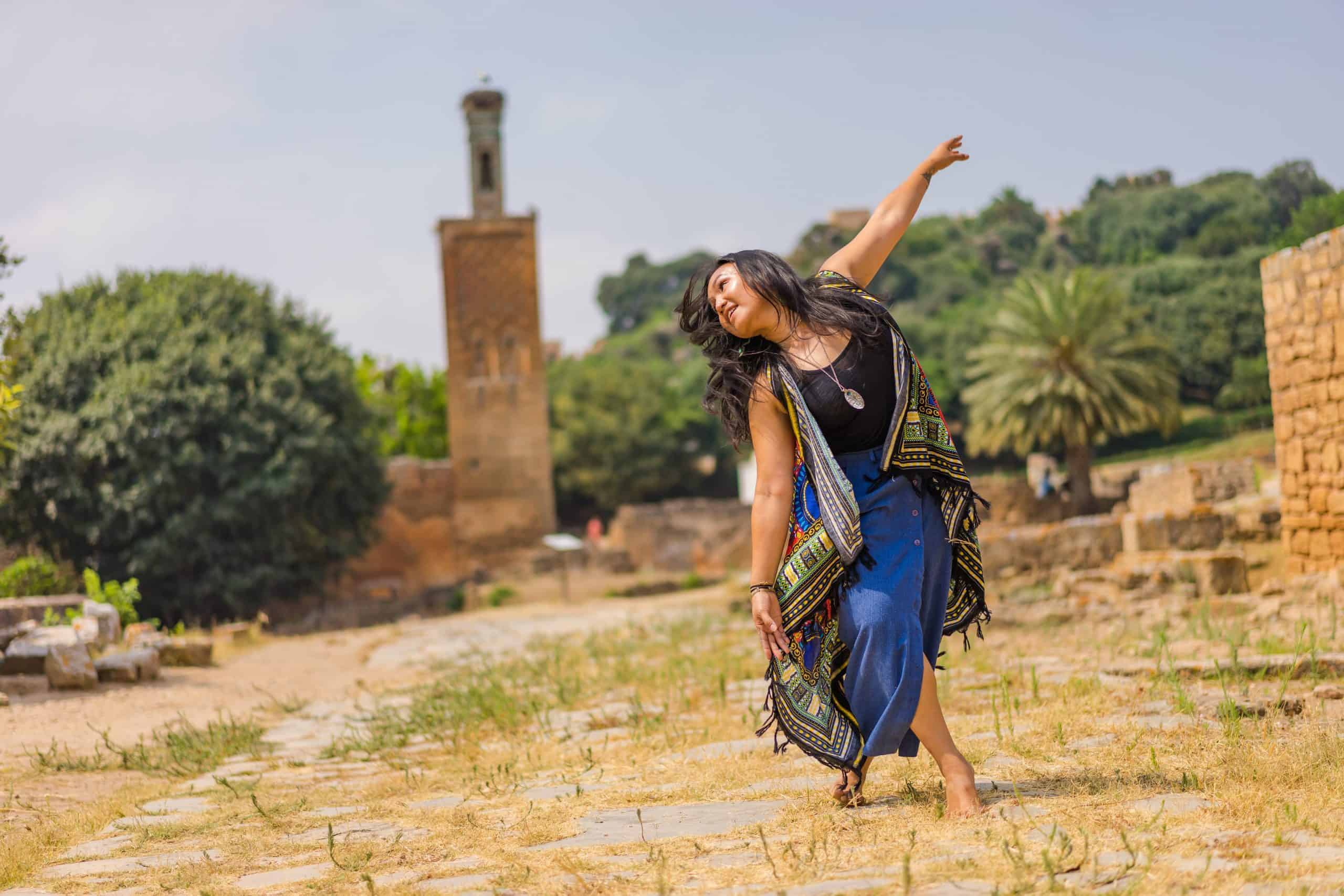
Next comes the Chellah, once the Roman town of Sala Colonia and later a Merinid royal necropolis, now a garden of palms, fig and olive trees around the ruins. You then visit the Mohammed V Mausoleum, resting place of King Mohammed V and King Hassan II, and the Hassan Tower beside it. Begun in 1195, the minaret was meant to crown the world’s largest mosque but stopped at 44 metres when Sultan Yacoub el-Mansour died in 1199.
Lunch is at a restaurant overlooking the Bouregreg River, whose estuary once sheltered the Barbary corsairs of Salé. Afterwards you walk the blue-and-white lanes of the Kasbah of the Oudayas and its Andalusian garden, and see the Oudayas Museum in Moulay Ismail’s 17th-century residence, with its carpets, jewellery and illuminated Qur’ans.
Meals: Breakfast · Overnight: Rabat
Day 3: Rabat to Casablanca – Anfa, the Corniche & Hassan II Mosque

A short morning drive brings you to Casablanca. You pass through the seaside district of Aïn Diab and the residential quarter of Anfa, with its Art Deco villas. It was here in 1943 that Roosevelt and Churchill met for the Casablanca Conference, and where Roosevelt held a private meeting with Sultan Mohammed V.
After lunch overlooking the Atlantic on the Corniche, you visit the Hassan II Mosque. Completed in 1993 and partly built over the ocean, it was designed by French architect Michel Pinseau and decorated by some 3,300 Moroccan craftsmen in carved cedar, stucco and zellige tilework. Its prayer hall holds 25,000 worshippers, with room for 80,000 more on the esplanade, and its minaret rises 210 metres.
You continue past the Royal Palace precinct to the Habous Quarter, a 1920s “new medina”, then via Mohammed V Square to United Nations Square near your hotel. In the evening your guide can suggest places to visit; many guests stop for a drink at Rick’s Café (optional, at your own cost).
Meals: Breakfast · Overnight: Casablanca
Day 4: Casablanca to Fes via Meknes, Volubilis & Moulay Idriss

After breakfast you head north-east to Meknes, an imperial city whose historic centre is on the UNESCO list. Sultan Moulay Ismail made it his capital in 1672, and his building projects earned it the nickname “the Moroccan Versailles”. You see the ramparts and Bab Mansour gate, the vast granaries and stables of Heri es-Souani built for the sultan’s 20,000 horses, the Christians’ Prison, the Moulay Ismail Mausoleum, Place el-Hedim and the Dar Jamaï Museum of regional crafts in an 1882 palace.
After lunch in Meknes you drive to Volubilis, a Roman city later settled by Berbers. Your guide leads you past olive presses, the Triumphal Arch, the Capitol and houses paved with mosaics, including the Labours of Hercules, Orpheus and the Dolphins, and Bacchus drawn by panthers.
The next stop is Moulay Idriss, the hilltop town founded by Idriss I, descendant of the Prophet and founder of Fes, regarded as Morocco’s holiest town and the focus of an annual August pilgrimage. You see the long square and the green-tiled roofs of his shrine before continuing to Fes.
Meals: Breakfast · Overnight: Fes
Day 5: Full-Day Guided Tour of Fes & its Medieval Medina

Fes was founded in the late 8th century by Idriss I and grew into one of the great centres of Islamic learning. Today its medina, Fes el-Bali, is a UNESCO-listed maze of lanes enclosed by ramparts.
After breakfast you stop for about 15 minutes at the Royal Palace (Dar el-Makhzen) to see its seven bronze doors, then walk through the Mellah, the old Jewish quarter. From the Borj Sud viewpoint you look over the whole medina before descending into it on foot.
The walking tour takes in the Bou Inania Medersa, the dyers’ street of es-Sabbaghine, the coppersmiths of es-Seffarine, and the Al Quaraouiyine Mosque and University and Attarine Medersa from outside. You pass the spice stalls of Souq el-Attarine to Nejjarine Square and its fountain, with a light lunch nearby. In the afternoon you see the tanneries on the banks of the Oued Fes and the henna souk before leaving through Bab Boujloud.
A drive around the ramparts leads to the 16th-century Borj Nord fortress and its Arms Museum, with more than 5,000 pieces including a 12-tonne cannon from the Battle of the Three Kings. The day ends at the Dar Batha Museum, known for its blue-glazed Fes ceramics and astrolabes.
Meals: Breakfast · Overnight: Fes
Day 6: Fes to Marrakech across the Middle Atlas Mountains

Today is a full travel day through changing mountain scenery. You leave Fes heading south into the Middle Atlas, passing Imouzzer Kandar and Ifrane, a mountain town often likened to a Swiss Alpine village. The road then runs through the cedar forest to Azrou and on via Khenifra and Kasbah Tadla.
Lunch is in Beni Mellal, set between the Tadla plain and mountains over 2,200 metres high. In the afternoon the High Atlas comes into view, including Jbel Azourki (3,690 m) and Irhil M’Goun (4,071 m). You skirt the low Jbilet hills and arrive in Marrakech for a three-night stay.
Meals: Breakfast · Overnight: Marrakech
Day 7: Guided Tour of Marrakech – Gardens, Palaces & Souks

Around 10 am your guided tour of Marrakech’s ramparts and monuments begins; you can choose to ride this first stretch in a calèche, a horse-drawn carriage (optional, not included). You visit the Majorelle Garden and its museum, long associated with fashion designer Yves Saint Laurent, then pass the 12th-century Koutoubia minaret on the way to Jemaa el-Fna. The square fills with musicians, storytellers, henna artists and food stalls, and you have lunch at the Al Baraka restaurant overlooking it.
The afternoon continues on foot. At the Saadian Tombs you see the Hall of Twelve Columns and the carved-cedar and stucco mausoleum of Sultan Ahmed el-Mansour, who died in 1603. The Bahia Palace, built in the late 19th century for Grand Vizier Ba Ahmed, has around 150 rooms arranged around tiled courtyards and gardens.
You then visit the Ben Youssef Medersa, a former Qur’anic school that once housed about 800 students around a central courtyard, and the nearby Almoravid Koubba, the oldest building in Marrakech. After the Marrakech Museum, you wind back through the souks, finishing at the dyers’ souk and Jemaa el-Fna. The evening is free; your guide can arrange the optional Chez Ali Fantasia dinner show with folk music and horseback displays.
Meals: Breakfast · Overnight: Marrakech
Day 8: Excursion to the Ourika Valley in the High Atlas

After a late breakfast you drive about 90 minutes south into the Ourika Valley, in the High Atlas foothills you can see from Marrakech. The river winds past orchards, terraced fields and Berber villages built of rammed earth into the hillsides.
You continue up the valley to Setti Fatma, the last village before the hiking trails, then return downstream for a light lunch at the Auberge Ramuntcho beside the river. Back in Marrakech, the rest of the day is yours.
Meals: Breakfast · Overnight: Marrakech
Day 9: Departure from Marrakech

After breakfast, and depending on your flight time, you are transferred to Marrakech Menara Airport. If your flight leaves from Casablanca, you are driven directly to Casablanca’s airport instead.
Meals: Breakfast
Accommodation
You stay eight nights in hotels or traditional riads: one each in Tangier, Rabat and Casablanca, two in Fes and three in Marrakech. Every property is handpicked for its authentic character, and VAT and regional taxes are included. For couples and small families, we suggest choosing riads in Fes and Marrakech, where courtyard houses in the medina offer more atmosphere and privacy.
Good to Know Before You Book
- Guides: English-speaking licensed local guides are standard, and you can opt for a guide in any language you prefer, such as Spanish, Portuguese, French or Chinese.
- Meals on this tour: daily breakfast from Day 2 (8 in total). The itinerary suggests lunch stops each day; lunches, dinners and drinks are paid locally.
- Not included on this tour: international flights or ferry tickets, lunches, dinners, drinks, tips, the optional horse-drawn calèche ride in Marrakech, any optional activity and personal expenses.
- Holiday dates: this itinerary does not run in its standard form between 24 December and 5 January, because most hotels in Fes and Marrakech require a minimum stay of five to six consecutive nights over that period. Contact us to discuss options for those dates.
- Day 1 timing: the Tangier sightseeing on arrival day depends on your arrival time.
- Site access: at the Royal Palaces in Rabat and Fes you see the exterior only; in Fes, the Al Quaraouiyine Mosque and Attarine Medersa are also viewed from outside.
- Walking: Days 5 and 7 include long guided walks on uneven, sometimes steep medina lanes.
- Driving: Day 6 (Fes to Marrakech) is a full day on the road with a lunch stop.
- What to pack: comfortable walking shoes, a warm layer for evenings and the Atlas Mountains, a small day pack, sun hat, sunglasses and sunscreen, hygiene wipes, zip-lock bags to protect camera lenses from dust, and swimwear depending on the season.
Who Is This Tour For?
- First-time visitors who want to see Morocco’s main cities in one well-paced trip
- Travellers arriving in northern Morocco by air or by ferry at Tangier
- History and architecture lovers drawn to Roman ruins, medinas, palaces and medersas
- Couples and families who want a private vehicle and a guide in their own language rather than a group coach
- Anyone who wants mountain scenery without a long Sahara desert circuit
- U.S. travellers interested in the Tangier American Legation and the Casablanca Conference story
Frequently Asked Questions
Quick answers about this 9-day private tour. Payment, deposit and cancellation questions are answered in the booking FAQ on this page.
Route & Travel
Meals, Accommodation & Fees
Guides & Travel Dates
Complete this short form now to receive your quote and get started planning your authentic Moroccan trip with a Morocco Expert:
Start Planning Your Trip Now
OUR LATEST TESTIMONIALS
-
 Family fun in Morocco - I could not be more delighted with the service that we received from this company from the day we booked it to the day we were dropped at the airport.... read more We were a party of 12. Nine of my grandchildren plus their partners (all in their 20’s) plus 3 other family members.
We were met on time by our fantastic driver Ibrahim who stayed with us all week. Our vehicle was a brand new Mercedes mini-bus. We also had different guides to some of the more historic places. Our travels took us from Marrakech to The Atlas Mountains, Sahara desert, Casablanca, Fez and Essaouira. We have unforgettable memories of camel riding into the sunset and dancing to Berber musicians infront of a fire pit late into the night.
The accomodation was outstanding in old, picturesque Riads everywhere (except luxury tents .with proper bathrooms . in the desert).
I cannot recommend this company too highly. We received exactly what was promised and they were always flexible if we needed to make a change.
Ofcourse, it’s helpful to have words of warning. There were some very long days of driving as we covered a lot of territory. This is not a choice for the less fit. Lots of steep stairs, not always with hand rails. . But I am 84 and I made it.
Also, don’t travel with checked in luggage. You don’t need many clothes and it’s easier to carry small cases.
This is our experience of just one of the many tours run by this excellent company. Good luck.
 Judy C
12 April 2025 Great way to see the beautiful country of Morocco! - Incredible opportunity to see everything Morocco has to offer in just one week! Tour guides and our driver, Ibrahim, were very knowledgable about different cities and towns. The minibus was... read more comfortable and we were accommodated well with our lunch stops and tour breaks on each drive. Would highly recommend to anyone who is looking to be fully immersed in Moroccan culture.  Molly S
14 April 2025 Exploring Marrakech - I had a great experience with this company. We used their services for airport pick-up and drop-offs as well as tours/excursions. Drivers Mohamed and Yasser made us very comfortable and... read more are safe drivers on the busy streets of Marrakech. Musafeh, our tour guide was a wealth of knowledge, knew his way around town and very patient as we explored the souks, museum and garden. He guided us safely through the souks. He was very interactive with us through conversations and helped us with the merchants. Top 10 service.  MillieJ1327
17 April 2025
Related Tours


Itinerary on the Map

Easy & Smooth Planning Process!
4 Steps to Your Perfect Trip
OUR LATEST TESTIMONIALS
- Exploring Marrakech - I had a great experience with this company. We used their services for airport pick-up and drop-offs as well as tours/excursions. Drivers Mohamed and Yasser made us very comfortable and... read more are safe drivers on the busy streets of Marrakech. Musafeh, our tour guide was a wealth of knowledge, knew his way around town and very patient as we explored the souks, museum and garden. He guided us safely through the souks. He was very interactive with us through conversations and helped us with the merchants. Top 10 service. MillieJ1327
17 April 2025 - Family fun in Morocco - I could not be more delighted with the service that we received from this company from the day we booked it to the day we were dropped at the airport.... read more We were a party of 12. Nine of my grandchildren plus their partners (all in their 20’s) plus 3 other family members.
We were met on time by our fantastic driver Ibrahim who stayed with us all week. Our vehicle was a brand new Mercedes mini-bus. We also had different guides to some of the more historic places. Our travels took us from Marrakech to The Atlas Mountains, Sahara desert, Casablanca, Fez and Essaouira. We have unforgettable memories of camel riding into the sunset and dancing to Berber musicians infront of a fire pit late into the night.
The accomodation was outstanding in old, picturesque Riads everywhere (except luxury tents .with proper bathrooms . in the desert).
I cannot recommend this company too highly. We received exactly what was promised and they were always flexible if we needed to make a change.
Ofcourse, it’s helpful to have words of warning. There were some very long days of driving as we covered a lot of territory. This is not a choice for the less fit. Lots of steep stairs, not always with hand rails. . But I am 84 and I made it.
Also, don’t travel with checked in luggage. You don’t need many clothes and it’s easier to carry small cases.
This is our experience of just one of the many tours run by this excellent company. Good luck. Judy C
12 April 2025 - Great way to see the beautiful country of Morocco! - Incredible opportunity to see everything Morocco has to offer in just one week! Tour guides and our driver, Ibrahim, were very knowledgable about different cities and towns. The minibus was... read more comfortable and we were accommodated well with our lunch stops and tour breaks on each drive. Would highly recommend to anyone who is looking to be fully immersed in Moroccan culture. Molly S
14 April 2025
Experiences & Activities:
We provide unique cultural experiences and memorable adventures





Talk to a Morocco Travel Expert Today:
Risk-Free Deposit:
Apply your deposit to a future tour if you need to cancel for any reason !